
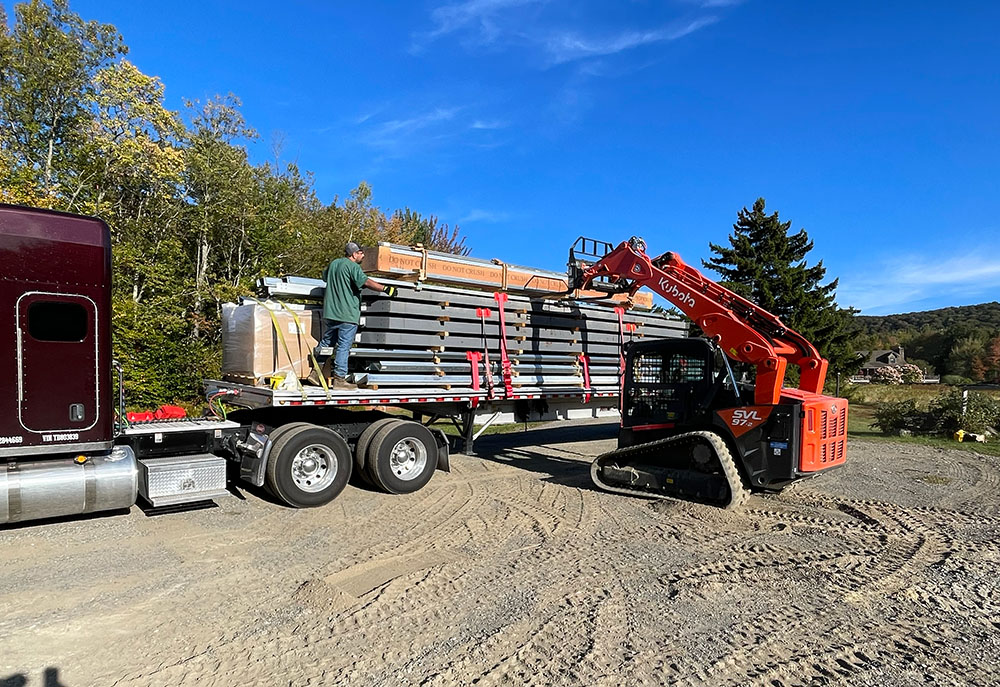
Because columns and rafters are the heaviest components and dictate the initial structural push, their placement must minimize heavy equipment movement.
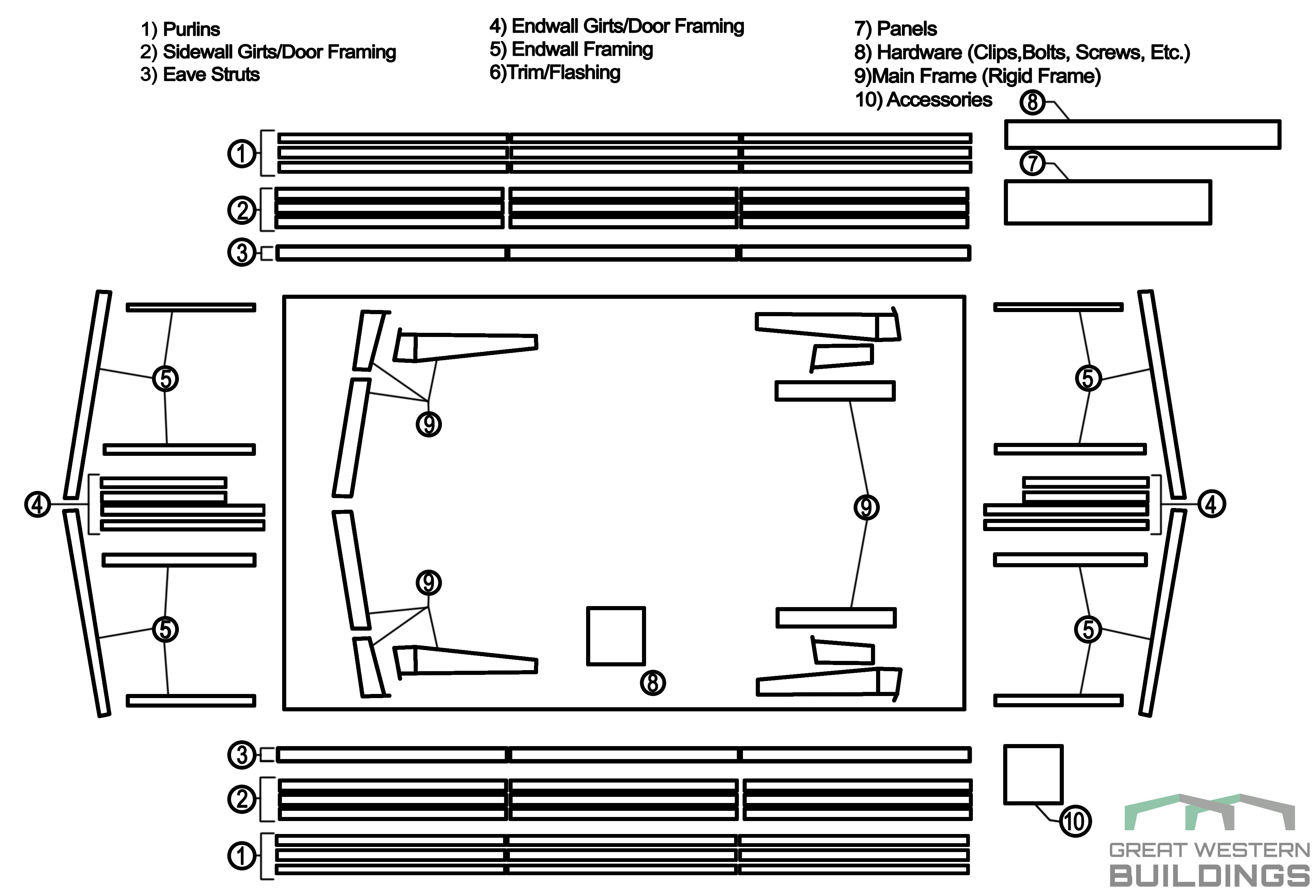
Sidewall Frames: Offload main columns and rafters as close to their final, respective installed locations as possible.
Elevated Blocking: Always place these heavy members on prepared blocking rather than directly on the dirt or concrete. This protects the finish and positions them perfectly for easy rigging and erection.
Endwall Layout: Lay out endwall frames at each respective end of the concrete slab. Position the endwall columns directly next to their corresponding anchor bolts to allow for a direct, vertical lift during assembly.
Secondary framing components require high accessibility without bottlenecking the interior space of the slab where lifts and scaffolding will operate.
Sidewall Staging: Depending on the total number of bundles delivered, store your purlins and girts parallel to and near the building sidewalls.
Clearance Zones: Keep these bundles completely clear of other component packages, pathways, or active staging parts to prevent sorting confusion when framing the walls and roof.
The efficiency of your build relies heavily on minimizing downtime spent searching for small components, structural bolts, and specialized fasteners.
Central Location: Locate all hardware packages centrally along one of the main sidewalls, ideally near the exact center point of the building footprint.
Traffic Reduction: This strategic, centralized placement dramatically minimizes walking distances for your crew when retrieving fasteners from opposite parts of the slab area.
Wall and roof panels feature factory finishes that are highly vulnerable to moisture trapping and scratching before they are permanently fastened.
Perimeter Storage: Locate your sheet packages along one or both sidewalls, keeping them completely off the active slab area until the primary framing is secure.
Ground Separation & Drainage: Always store sheet bundles completely off the ground. Elevate one end of the package so the sheets slope downward to one end; this encourages immediate water drainage and prevents dangerous moisture accumulation in the event of precipitation.
Smaller components, trims, and structural accessories can easily be misplaced or damaged if left in high-traffic work zones.
Out-of-the-Way Storage: Offload accessory packages either on an exterior corner of the concrete slab or entirely off the slab near one far end of the building.
Active Area Clearance: Keeping accessories isolated in a designated perimeter zone keeps them safe and completely out of the way of heavy machinery and active foot traffic during the primary steel erection phase.
For more information about safely unloading, organizing, staging, preparing, and erecting your building, you can download our full erection manual. If you have any questions, please don’t hesitate to contact us!
"(Required)" indicates required fields
You should receive your estimated quote by email shortly. Please keep in mind that this is just an estimate and does not include snow loads, wind loads, county specific code requirements, delivery or design specific engineering calculations related to the structural soundness of the building.
Would you like a response via text message? Opting into SMS indicates you agree to receive SMS messages regarding your request from Great Western Buildings. Message and data rates may apply. Message frequency may vary. To end messaging from us, you may always reply with STOP. You may also reply with HELP for more information.