
At Great Western, we take great pride in the fact that our buildings are designed with DIY-ers and first-time builders in mind. Moreover, we take great pride in our safety track record and our detailed erection guides that outline how to safely and properly erect your steel building kit. These guides are free and available to anyone to download. It’s worth noting before we go any further that these examples and associated safety tips do not apply solely to GWB kits. They’re applicable to virtually all PEMB buildings. No matter who you buy your metal building from, we want to ensure it’s erected safely.
Unfortunately, almost all structural failures of metal building kits come from oversight or carelessness during the erection phase. We’re going to take a look at two examples of collapsed steel buildings and dive into what caused these accidents and, importantly, what can prevent them. It is worth noting that, in both cases, these buildings were being erected by contractors and the incidents are no fault of the owners or the manufacturer.
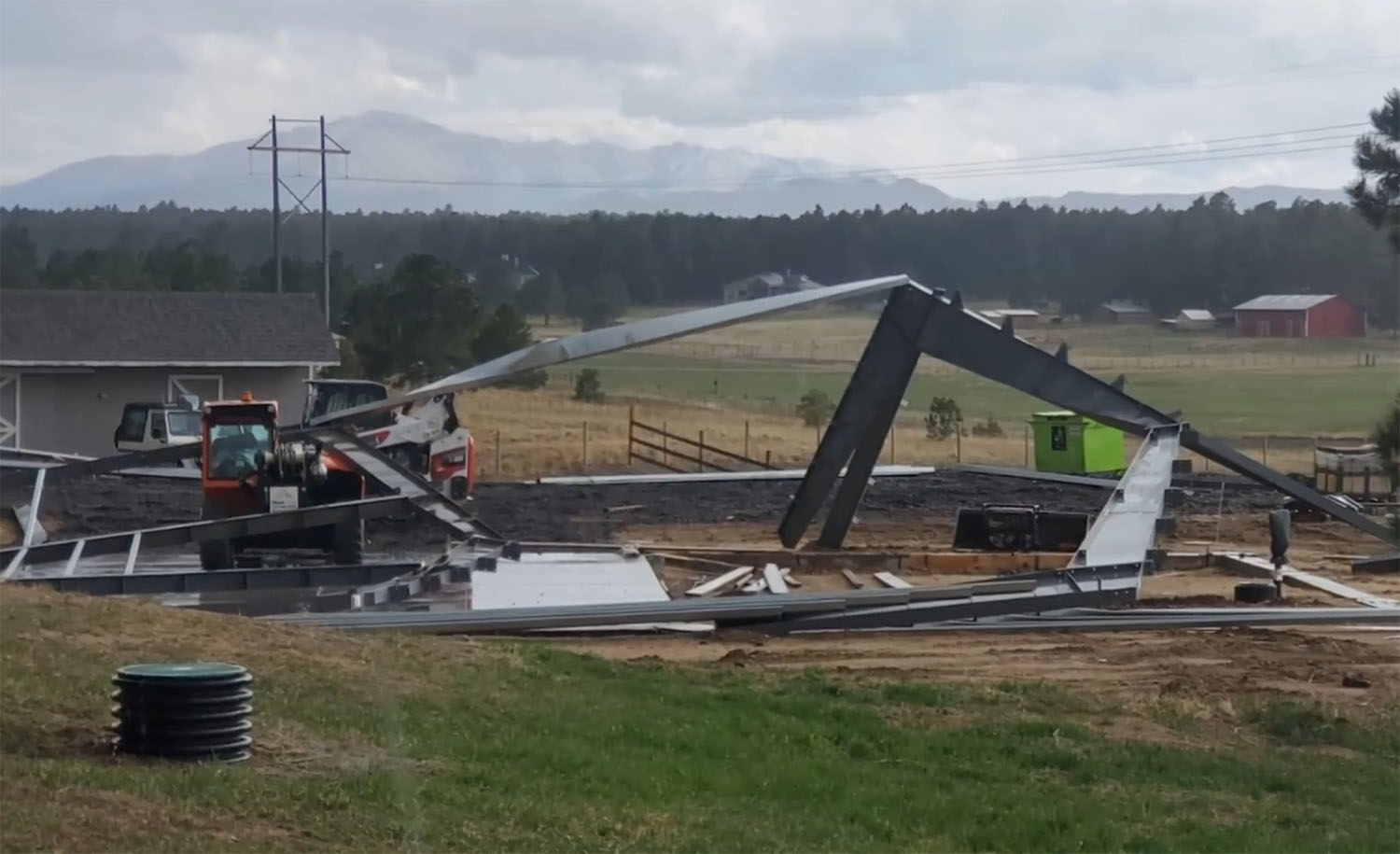
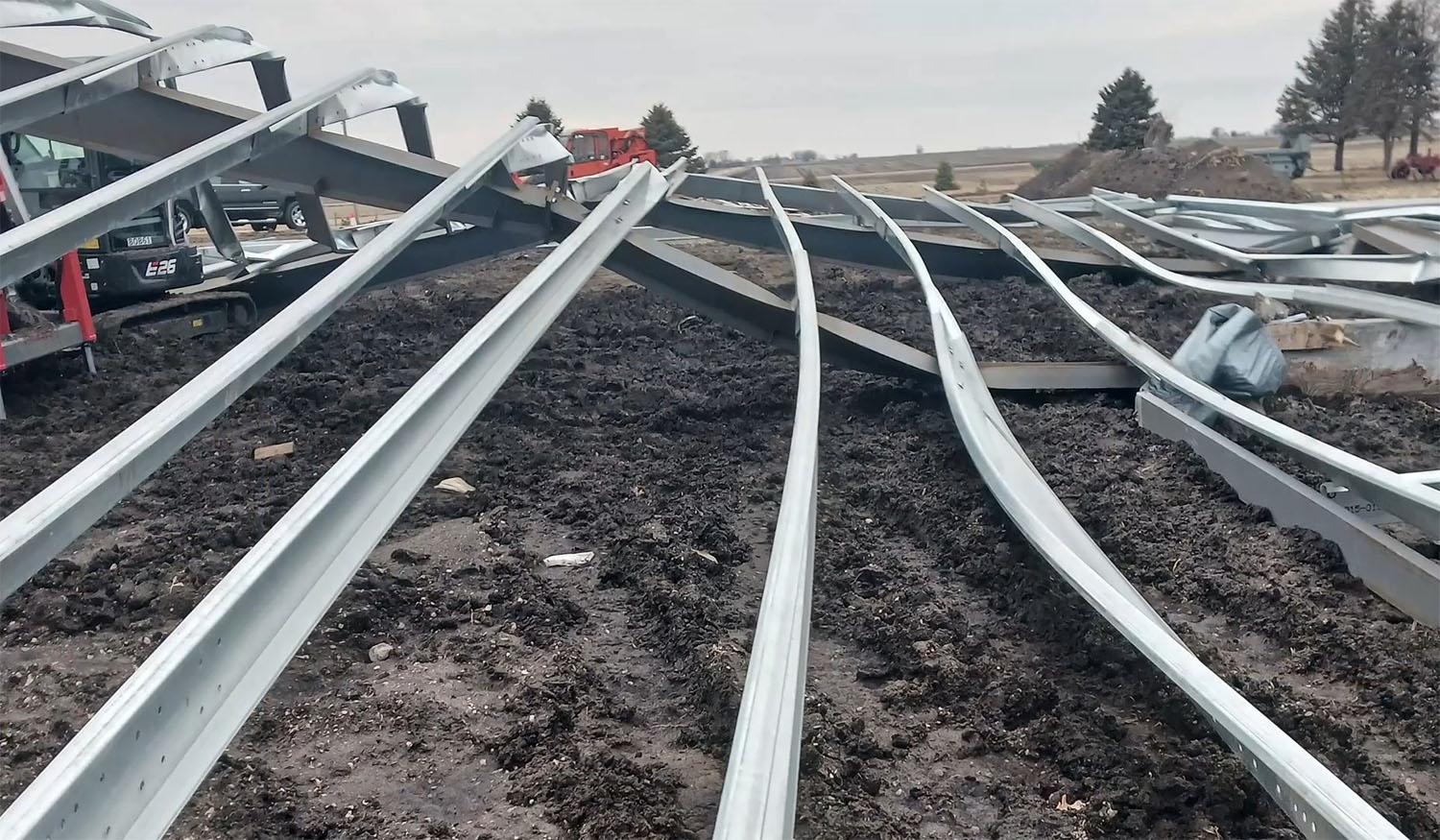
Our first example collapsed due to high winds and improper bracing. From the photo, you can see that the rigid frame columns and rafters were assembled and standing. However, no roof purlins or girts were installed. This means that the frame components were standing solely mounted to the anchor bolts. With this building’s high snow load, the wide beams act like sails in the wind, and without anywhere to transfer that wind load, this building collapsed. Fortunately, the contractor and team had left for the day, and nobody was injured when it came down.

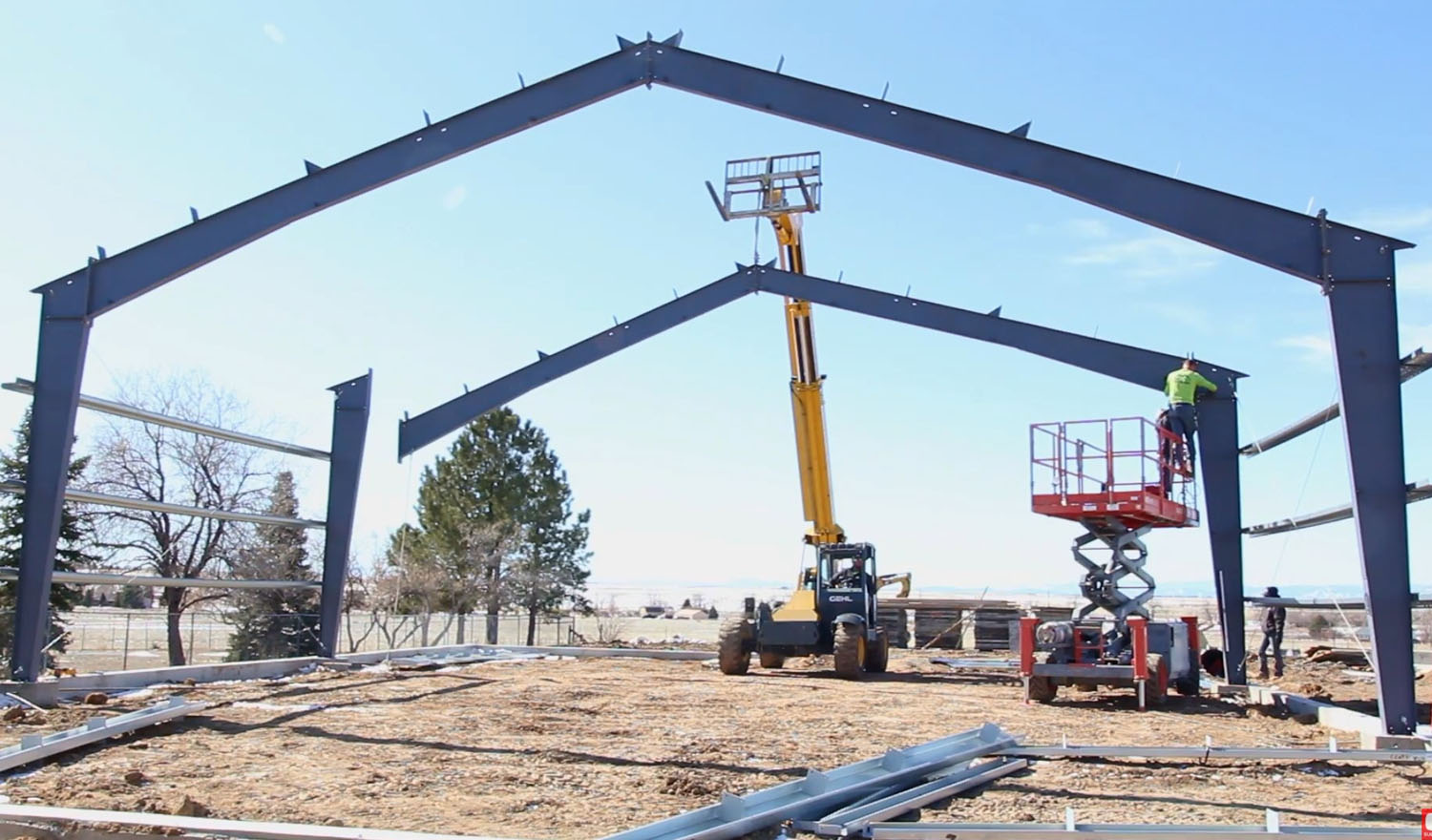
This failure happened because of an improper erection sequence with the rigid frame. Columns should always be installed first, with wall girts and eave struts in place, before flying rafters into place. This way, in the event of a wind storm, the structure acts as a single unit to evenly distribute the wind load.
Once the rafters are installed, peak purlins should be installed as soon as possible to further distribute any unplanned loads, such as high winds or seismic activity. It’s worth noting, too, that most builders do not have the ability to assemble the entire bay system on the ground and lift it into place. Instead, typically, one rafter is installed at a time. When a sole rafter is up, it’s important to brace it from both sides to ensure it is properly secured.
Proper bracing is extremely important for the safe erection of your steel building. So, if you’re hiring a contractor, it’s important that you discuss proper bracing with them to ensure you don’t wind up with a pile of twisted metal and a hefty bill to deal with.
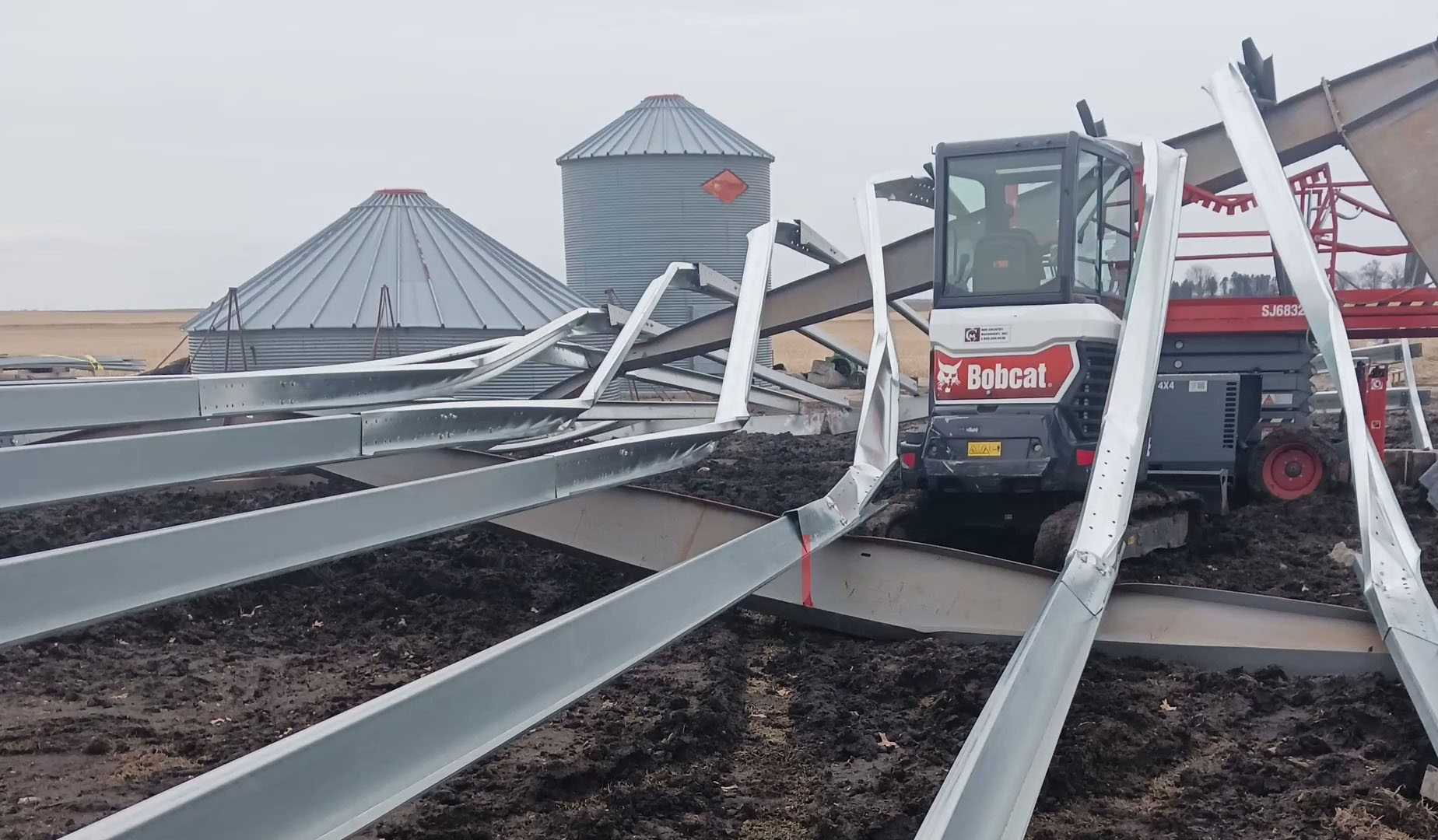
This building collapse is a bit of a double whammy. However, the biggest problem was the foundation it was standing on and the hardware used to secure it. For one, the contractor that erected this building opted to use wedge anchors instead of poured or epoxied anchor bolts. Wedge anchors should NEVER be used for a structural installation, such as rigid frame columns. It is a disaster waiting to happen.
Furthermore, from the photos, GWB founder Eric Beavers concluded that the pour J bolts used for some columns were much shorter than we’d typically recommend. Worse yet, the concrete (which lifted when the building collapsed) suggests that the footing the column was bolted to was poured separately from the rest of the foundation and was neither reinforced nor physically connected to it. This “cold joint” means that only a 16×16-inch block of concrete secured this entire end of the building.
At Great Western, we offer foundation plans with every building we design. Though it does add to the cost of the building, it adds an extra level of peace of mind when your building is being erected that the foundation it’s sitting on is up to snuff. Your snow and wind loads don’t mean much if your building is sitting on a crumbling foundation that can’t withstand the environment. Anchor bolts should be the very last thing to fail, and at Great Western, our anchor bolt reactions are created with a combination of snow, wind, and seismic loads acting together to ensure your anchors are beyond strong enough to withstand the elements.
Further images appear to show that, while the roof purlins were in place, no X-bracing, flange bracing, or purlin overlap bolts were installed when the frame came down. Though the purlins were overlapped and attached to the rafters, the lack of lap bolts allowed the connection to the rafters to act as a pivot point. Once the foundation failed, there was no structural rigidity to keep the building from collapsing in on itself.
Ultimately, the story goes the same as it always does. If you’re not acting safely and taking proper precautions, then you can’t expect a safe environment. It’s easy to get go fever or look at current weather conditions and brush off bracing in lieu of getting more done. However, this kind of corner-cutting can lead to severe injury or death. We want everyone with a PEMB to enjoy their building and believe that metal building kits should go up quickly and easily, but we also want them to be properly built so that they can last a lifetime.
Looking for a place to start? Our sales team is here to help get you exactly what you need. Whether you’re building a shop, garage, a full-blown residence, or a storage or agricultural building, our steel building kits are your perfect solution. Each one is designed and engineered to meet not only your needs, but your local coding requirements so that you can get the job done right quickly and seamlessly, the first time.
You should receive your estimated quote by email shortly. Please keep in mind that this is just an estimate and does not include snow loads, wind loads, county specific code requirements, delivery or design specific engineering calculations related to the structural soundness of the building.
Would you like a response via text message? Opting into SMS indicates you agree to receive SMS messages regarding your request from Great Western Buildings. Message and data rates may apply. Message frequency may vary. To end messaging from us, you may always reply with STOP. You may also reply with HELP for more information.